
The Preacher's Lectionary Notebook - Thematic Connections
The Third Sunday after the Epiphany (Year A)

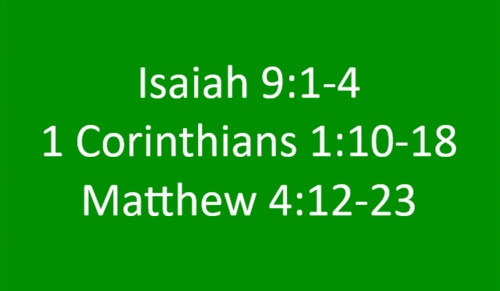
Isaiah 9:1-4; 1 Corinthians 1:10-18; Matthew 4:12-23
Isaiah’s ancient poetry opens in darkness, but not the final kind. It is the darkness of people accustomed to loss, to imperial boots crossing their land, to the slow dimming of hope. Yet Isaiah dares to say that this darkness is not permanent. Light will dawn precisely where despair has settled most deeply—Galilee of the nations, a place marked by mixture, marginality, and vulnerability. Liberation, in Isaiah’s telling, is not abstract or distant; it is bodily and social. The yoke is broken, the rod lifted, the oppressor’s staff shattered. Joy erupts not from triumphal conquest but from release—like harvest laughter, like soldiers relieved of armor they no longer need to wear. God’s saving work interrupts history not by erasing suffering’s memory, but by transforming the conditions that made suffering seem inevitable.
That same divine interruption echoes, in a different register, in Paul’s words to the fractious church in Corinth. Here the darkness is not foreign domination but internal fracture—communities splintering around personalities, allegiances, and spiritual status. Paul’s appeal for unity is not a plea for politeness or institutional harmony. It is a theological insistence that the cross itself dismantles the logic of competition and pride. The message of the cross, Paul says, is foolishness to those who measure power by dominance and wisdom by rhetorical brilliance. Yet this “foolish” message is precisely where God’s power is revealed. Just as Isaiah imagined liberation that breaks oppressive structures, Paul insists that the cross breaks the systems of value that divide the community. Unity is not achieved by rallying around the strongest leader, but by kneeling together at the foot of a crucified Messiah who refuses to be used as a factional mascot.
Matthew’s Gospel draws these themes together by locating Jesus’ ministry squarely within Isaiah’s promise. When Jesus withdraws to Galilee after John’s arrest, it is not a retreat but a fulfillment. The light Isaiah foresaw now walks the shoreline, calling fishermen into a new way of life. Jesus’ proclamation—“Repent, for the kingdom of heaven has come near”—is not a threat but an invitation to reorient life toward God’s inbreaking reign. Healing the sick and announcing good news are not separate activities; they are two expressions of the same reality. The kingdom Jesus embodies addresses both the full nature of human brokenness. Nets are dropped, diseases are healed, and people discover that following Jesus means stepping into the light that exposes and restores at the same time.
These texts tell a single story of God’s disruptive grace. God shines light where darkness has been normalized, calls unity where division feels justified, and announces good news where people have learned to expect very little. Liberation, reconciliation, and mission are not competing themes but overlapping movements of God’s redemptive work. Isaiah names the hope, Paul guards its integrity, and Matthew shows it walking along dusty roads, calling ordinary people to participate. The light has come, not to overwhelm the world with force, but to gather it—fragmented, weary, and longing—into the surprising joy of God’s reign.
FOR FURTHER EXPLORATION
What kinds of “darkness” or oppression do Isaiah and Matthew identify, and where do we see similar forms today?
How does Paul’s focus on the cross challenge the ways communities divide themselves around leaders, ideologies, or identities?
What might it look like, in everyday life, to respond to Jesus’ call to “repent” and follow him as a movement from darkness into light?