
The Preacher's Lectionary Notebook - Between Heaven and Earth
The Last Sunday after the Epiphany: Transfiguration Sunday (Year A)

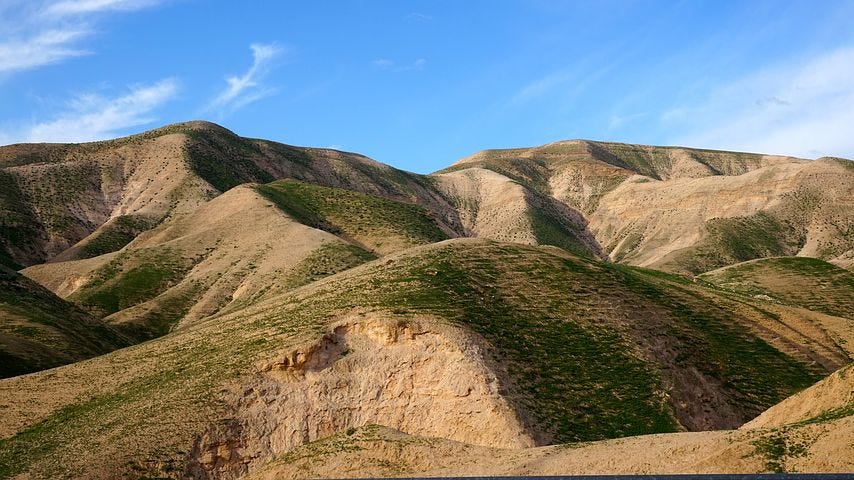
Up to this point in Exodus, God has been loud and public—thunder, commandments, a whole nation trembling at the foot of Sinai. But now the scene narrows. God calls Moses up the mountain again, this time not to address the crowds but to receive something lasting: the tablets of stone, the law and commandments written by God’s own hand. It’s a shift from spectacle to intimacy, from noise to waiting. Moses isn’t just a messenger anymore; he’s becoming a witness to something deeper.
What’s striking is how intentional the pause is. Moses doesn’t rush up the mountain alone and disappear. He brings Joshua with him part of the way, appoints Aaron and Hur to lead in his absence, and tells the elders, essentially, “If something goes wrong, here’s who you go to.” Leadership here is communal and careful, not reckless. Then Moses ascends further into the cloud. Throughout Scripture, the cloud signals God’s presence, but it also signals concealment. God is near, but not fully graspable. You don’t just stroll into this space; you enter it slowly, reverently, and with some fear.
The mountain itself becomes a kind of boundary marker between heaven and earth. God’s glory settles on Sinai like a consuming fire, visible to the Israelites below. From their perspective, it probably looks terrifying—fire devouring the mountaintop, smoke swirling, Moses swallowed up by it all. But what looks like danger from the outside is actually encounter on the inside. Moses enters the cloud and waits there six days before God even speaks. Six days of silence. Six days of nothing but presence. That detail is easy to miss, but it’s powerful. Revelation doesn’t come immediately. Before Moses receives words, he receives stillness.
Then, on the seventh day, God calls to Moses from within the cloud. The pattern echoes creation itself—six days of preparation, a seventh day of purpose. And Moses remains on the mountain forty days and forty nights, a number that will echo again and again in Scripture as a time of testing, transformation, and preparation. This is not quick inspiration; it’s slow formation. Moses is being shaped as much as he is being instructed.
There’s also a tension here between distance and nearness. The people stay below, watching the fire from afar. Moses goes up, entering the cloud. The text doesn’t shame the people for staying back; it simply tells the truth about where they are. Not everyone is called to the same level of closeness, but someone must go up the mountain. Someone must be willing to wait, to linger, to sit in uncertainty until God speaks.
This text reminds us that God’s guidance often comes wrapped in delay and mystery. We want clarity right away, but God seems comfortable with process. The law is given, yes—but first there is waiting, silence, and awe. The fire that looks consuming from a distance is, for Moses, the place where God writes his will. And maybe that’s the quiet invitation of the passage: not to fear the cloud, but to trust that within it, God is still speaking.
FOR FURTHER EXPLORATION
Why do you think God required Moses to wait in silence for six days before speaking, and what might that suggest about how we receive guidance today?
What does the contrast between the people at the foot of the mountain and Moses in the cloud reveal about distance and closeness to God?
How does the image of fire and cloud shape the way we understand God’s presence—as both inviting and unsettling?