
The Preacher's Lectionary Notebook - God's Favor Rests Upon You
The Fourth Sunday after the Epiphany (Year A)

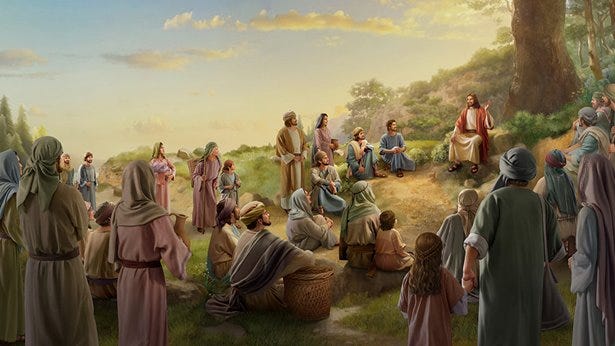
Jesus doesn’t march into Jerusalem or seize a platform in the temple courts. He sees the crowds, walks up a hill, sits down, and begins to teach. That detail matters. Sitting was the posture of a teacher, but the hill evokes Sinai, whether Matthew intends a full-blown comparison or not. Either way, Jesus is positioning himself as one who speaks with authority about God’s will. The disciples are closest to him, but the crowds are clearly within earshot. What follows in Matthew 5:1–12—the Beatitudes—is not an abstract theological lecture. It’s a description of the kind of life that flourishes under God’s reign, and it’s deeply counterintuitive from the start.
The word “blessed” sets the tone, but it doesn’t mean “happy” in a shallow, emotional sense. It’s more like “favored” or “in a good place with God,” even if it doesn’t look that way from the outside. Jesus’ day had prosperity preachers too. He is not one of them. When Jesus says, “Blessed are those who mourn,” he counters the idea that mourning is a lesson sent by God because someone did something wrong. No. Instead he is saying, “Remember that even though you mourn, God’s favor rests upon you. Even though you are poor, God’s favor is with you.”
Jesus begins with the poor in spirit, those who know they don’t have spiritual resources to lean on. This isn’t about pretending to be worthless; it’s about honesty. The kingdom of heaven belongs to people who know they need it. From there Jesus moves to mourners, the grieving, those who feel the ache of a world that is not as it should be. Instead of telling them to toughen up or move on, Jesus says comfort is coming. Grief, in this vision, is not a failure of faith but evidence that one’s heart is still alive.
Then there are the meek or gentle, a group often misunderstood as weak or passive. In Jesus’ world, meekness is strength under control, a refusal to grasp for power at all costs. These are the people who will inherit the earth, which sounds almost ironic given how often the earth is taken by the ruthless. Jesus follows this with those who hunger and thirst for righteousness—not private moral perfection, but God’s justice, God’s setting-things-right in the world. This kind of longing assumes dissatisfaction with the status quo and a deep desire for God’s future to break into the present.
Mercy, purity of heart, and peacemaking follow, and they all describe relational postures rather than abstract virtues. The merciful are those who refuse to let vengeance define them. The pure in heart are not the morally obsessive but the undivided, those whose loyalty is not split between God and something else. Peacemakers are not conflict-avoiders; they step into broken situations and work toward reconciliation, even when it costs them something. Jesus says these people look like God’s own children, because this is how God acts.
The final beatitudes turn darker, focusing on persecution. Jesus assumes that living this way will provoke resistance. People committed to power, domination, and control don’t tend to applaud mercy, humility, and justice. Yet Jesus insists that even here there is blessing. The prophets walked this road, and so will those who follow him. Matthew 5:1–12, then, is not a list of spiritual self-improvement tips. It’s a portrait of a community shaped by God’s kingdom—a community that looks upside down to the world, but which Jesus insists is right-side up in the eyes of God.
FOR FURTHER EXPLORATION
How do the Beatitudes challenge common ideas about success, happiness, and power in our culture today?
Which Beatitude feels most difficult to live out, and why might Jesus place it at the center of life in God’s kingdom?
What might it look like for a church or community to take the Beatitudes seriously as a way of life rather than as ideals to admire?