
The Preacher's Lectionary Notebook - More Than an Ordinary, Dusty Rabbi
The Last Sunday after the Epiphany: Transfiguration Sunday (Year A)

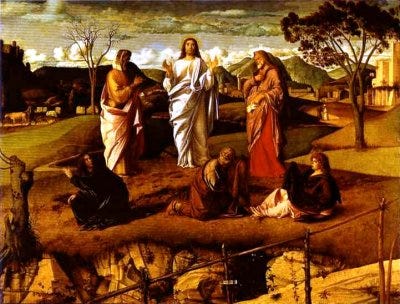
Jesus takes Peter, James, and John up a high mountain, away from the crowds, away from the noise, away from the constant demands. That detail alone matters. Revelation doesn’t happen in a rush or on the run; it happens when there’s space to see. And what they see up there is not a new Jesus, but the Jesus who has been there all along. He is transfigured—his face shining like the sun, his clothes blazing white. It’s as if the curtain is pulled back for just a moment, and the disciples glimpse the deeper truth beneath the ordinary, dusty rabbi they’ve been following.
Then Moses and Elijah appear, standing with Jesus like witnesses from Israel’s long memory. The lawgiver and the prophet, the story and the promise, the past and the hope of what God has been doing all along—now gathered around Jesus. This isn’t random symbolism; it’s theological shorthand. Everything Israel has been waiting for is converging right here. Jesus isn’t rejecting the law and the prophets; he is fulfilling them, embodying them, bringing them to their intended end. The disciples don’t need a lecture to understand that something massive is happening, but they also don’t know what to do with it.
Peter, predictably, speaks up. He wants to build tents, to freeze the moment, to preserve the glow and the certainty. It’s an understandable impulse. Who wouldn’t want to hold onto a mountaintop experience? But Peter’s suggestion misses the point. The transfiguration is not a destination; it’s a revelation meant to prepare them for what’s coming next. Before Peter can finish his well-meaning plan, a bright cloud overshadows them, and a voice speaks: “This is my Son, the Beloved; with him I am well pleased; listen to him.” Not admire him. Not enshrine the moment. Listen to him. That command lands like thunder, and the disciples fall facedown, overwhelmed by fear.
And then comes the gentlest part of the story. Jesus touches them and says, “Get up and do not be afraid.” When they look up, Moses and Elijah are gone. The glory has faded. Only Jesus remains. The voice from heaven doesn’t leave them with a spectacle; it leaves them with a person. The one they are to listen to is the same one who will soon walk down the mountain toward suffering, rejection, and the cross. The radiance of the transfiguration doesn’t cancel out the road to Jerusalem; it makes sense of it.
As they head back down the mountain, Jesus tells them not to say anything until after the resurrection. That silence isn’t about secrecy for its own sake; it’s about timing. Without the cross and resurrection, the transfiguration would be misunderstood as triumph without cost, glory without love. Matthew 17:1–9 reminds us that God’s glory is not opposed to suffering but revealed through it, and that real listening means following Jesus not just when he shines, but when the path gets dark. The mountain shows us who Jesus really is, so we can trust him when the road leads downward.
FOR FURTHER EXPLORATION
Why do you think Jesus chose Peter, James, and John to witness the transfiguration, and what might that say about preparation for leadership or suffering?
What does the command “listen to him” mean in practical terms for how we read and follow Jesus today?
How might the memory of the mountaintop shape faith when life moves back into ordinary or difficult terrain?