
The Preacher's Lectionary Notebook - Not From Imagination, But From Memory
The Last Sunday after the Epiphany: Transfiguration Sunday (Year A)

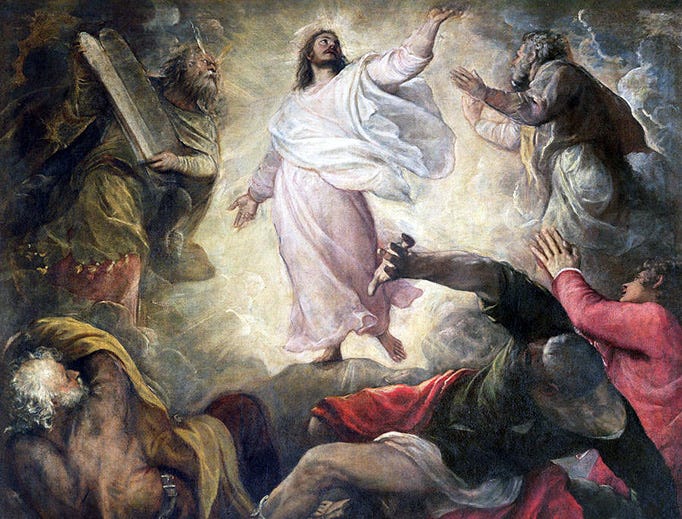
The writer of 2 Peter wants his readers to know, right up front, that the Christian message didn’t start as a clever story cooked up to impress the masses. This isn’t myth, propaganda, or some spiritual fan fiction meant to stir emotions and gain followers. Instead, he insists that what he and the others proclaimed came out of lived experience. They saw something. They were witnesses. When he talks about the power and coming of Jesus Christ, he’s not drawing from imagination but from memory—specifically the memory of standing on a mountain and watching Jesus’ glory break through in a way that changed everything.
Peter recalls that moment when Jesus was revealed in majesty, when heaven itself seemed to lean down and speak. The voice from the “Majestic Glory” naming Jesus as the beloved Son wasn’t a private inner feeling or a vague spiritual impression. It was public, audible, and shared. Peter isn’t saying, “Trust me because I feel deeply about this.” He’s saying, “Trust me because something happened, and we were there when it did.” In a world where authority often comes from charisma and novelty, Peter grounds authority in testimony and encounter. The Christian faith is stubbornly historical.
But Peter doesn’t stop with experience. He pivots to Scripture, and that move matters. Experience alone can be powerful but also slippery, especially over time. So he says that the prophetic word is “more fully confirmed.” The strange but beautiful logic here is that the mountaintop experience doesn’t replace Scripture; it sends believers back to it with clearer eyes. The glory they saw in Jesus helps them read the prophets with fresh understanding. Scripture becomes like a lamp in a dark place—steady, patient, not flashy, but reliable—guiding the community until the full daylight of Christ’s return.
Then Peter addresses a danger that never seems to go away: the temptation to treat Scripture as a personal playground. He’s clear that prophecy isn’t a matter of someone’s private interpretation or creative insight. Scripture didn’t originate in human will or imagination. It wasn’t the result of people sitting around thinking deep religious thoughts and writing them down. Instead, he says, it came as people were “carried along” by the Holy Spirit. That image is gentle but firm—less like control and more like guidance, like a ship moved by wind rather than its own power. The point isn’t to flatten the human authors into the exact same experience, but to remind readers that the source runs deeper than any one personality.
All of this comes together as a call to humility and trust. Peter is pushing back against both cynical skepticism and reckless spiritual freelancing. On the one hand, he says the faith is rooted in real events, real witnesses, and a real Jesus revealed in glory. On the other hand, he insists that this revelation is safeguarded and interpreted within the community shaped by Scripture and the Spirit. Truth here is not self-generated, nor is it endlessly customizable. It’s received, remembered, and handed on. In a noisy world full of confident voices, 2 Peter 1:16–21 invites readers to slow down, pay attention to the light they’ve been given, and trust that it leads somewhere real.
FOR FURTHER EXPORATION?
Why does Peter stress eyewitness testimony, and how does that shape the way we think about Christian truth today?
What does it mean to treat Scripture as a “lamp in a dark place,” especially in times of confusion or competing voices?
How can communities guard against purely private or self-serving interpretations of Scripture while still listening for the Spirit?