
The Preacher's Lectionary Notebook - The Sacrifice of Isaac and Abraham's Silence
The Fifth Sunday after Pentecost (Year A)

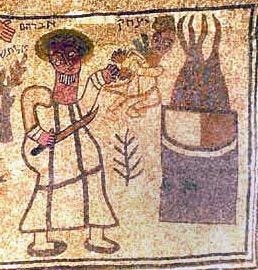
“The Sacrifice of Isaac,“ Beit Alfa, 6th century CE
Genesis 22:1-14 is one of the most troubling stories in the Bible. God orders Abraham to take Isaac, the son of promise, to the land of Moriah and give him as a burnt offering. Why would God ask that? These questions are at the heart of the passage and are explored in depth by the biblical scholar Richard Middleton in his book Abraham’s Silence.
The narrative begins with a straightforward but ominous exhortation: “God tested Abraham.” The reader knows it all along, but Abraham doesn’t. He only hears the divine command. The language amps up the emotional weight of the story. God says Isaac is “your son, your only son whom you love.” The command threatens not just Abraham’s beloved child but also the future that God had promised. Isaac is the one through whom Abraham’s descendants are supposed to come. If Isaac dies, the promise itself seems to die with him.
What is notable about this silence is that Abraham was also in the midst of his own crisis. God was at odds with Abraham earlier in Genesis over Sodom and Gomorrah and he made his case for the righteous who lived there. But here, when the life of his own son is at stake, Abraham does not say anything to God. Middleton finds this silence very disturbing and disquieting. Rather than presenting Abraham as an example of unquestioning obedience, Middleton begs readers to wrestle with the silence itself. Why doesn’t Abraham challenge God as he did before? Why do we not have a conversation, no protest, no plea?
As the journey continues, Isaac plays a greater role. He is there to carry the wood for the sacrifice and Abraham is there to carry the knife and fire. Isaac eventually asks the question that has hung over the whole story: “Where is the lamb for a burnt offering?” Abraham replies that God will provide. The answer is ambiguous. It may express faith, uncertainty, or even hope that somehow God will intervene before the terrible deed is completed.
The tension is reached when Abraham binds Isaac and places him on the altar. At the very moment the knife is raised, the angel of the Lord calls out and stops him. Abraham has shown his resolve in his submission, but Isaac is spared. The ram caught in a thicket serves as a substitute sacrifice. The promise holds through and the story goes from death to life.
Middleton argues that the ending of the story reveals something important about God as a person. The narrative ultimately rejects child sacrifice rather than endorsing it. The God of Israel is not like the gods of the surrounding cultures who were demanding children’s lives. God is the one who makes sure that the test has to do with divine intervention and provision. Abraham calls the place “The Lord Will Provide,” because God is faithful and not human sacrifice is the first thing that comes to his mind.
Genesis 22 continues to challenge readers because it doesn’t give easy answers. It is all about faith, obedience, trust, and the nature of God. Abraham’s silence and God’s provision leave readers feeling for the first time that you don’t have to be sure of anything if you’re in faith. It leaves readers wondering why God is testing, providing, and keeping all of those promises made long ago.
FOR FURTHER EXPLORATION
Why do you think Abraham remained silent when God commanded him to sacrifice Isaac, especially since he had previously argued with God over the fate of Sodom?
What does God’s provision of the ram in place of Isaac reveal about God’s character and God’s relationship with human beings?
How does this story challenge our understanding of faith and obedience when God’s purposes seem difficult or impossible to understand?