
The Preacher's Lectionary Notebook - Preaching Foolishness to the Wise
The Sixth Sunday of Easter (Year A)

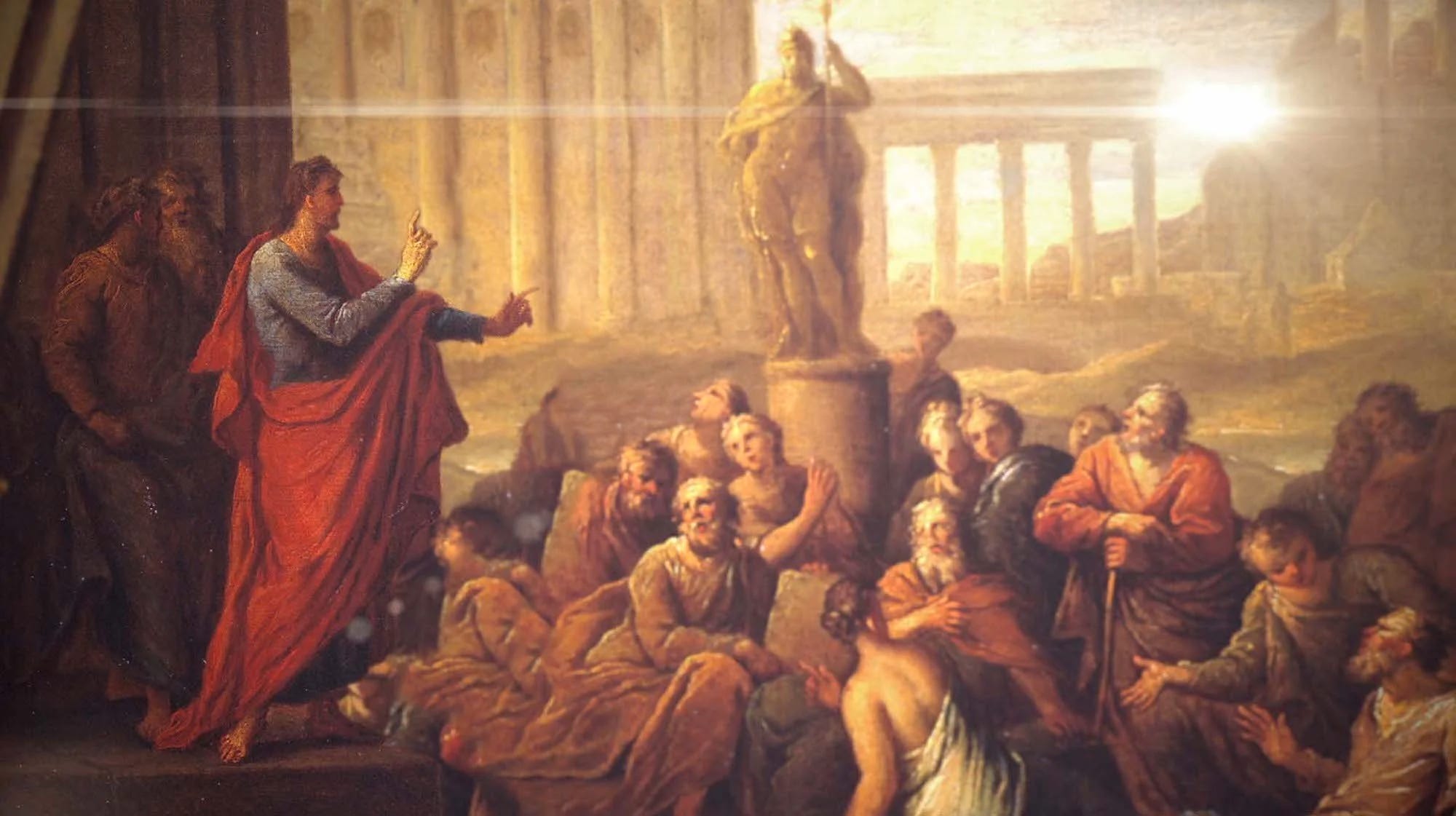
Paul finds himself in Athens, where the atmosphere is thick with both curiosity and tension. This city is renowned for its emphasis on ideas, philosophy, and religion, evident in the numerous altars and statues that populate the landscape. As Paul walks through the streets, he takes time to absorb his surroundings, observing what truly matters to the people rather than dismissing their beliefs outright.
When he eventually addresses the crowd at the Areopagus, he chooses not to confront them aggressively; instead, he approaches them with respect. He acknowledges their deep religiosity in a straightforward manner, which is noteworthy because his intention is not merely to win an argument but rather to establish a connection. He references an altar bearing the inscription “To an unknown god,” using it as a starting point for his discourse. It’s as if he suggests that they recognize something greater exists beyond their comprehension.
From this point, Paul subtly redirects the discussion towards the God who created the world and all that inhabits it—a deity not limited by temples or reliant on human craftsmanship. Such a declaration would have been particularly striking in a city filled with shrines. Paul articulates a vision of a Creator who transcends their established categories and provides life and breath to all beings. This assertion goes beyond theological speculation; it invites a fundamental shift in their perception of reality. Rather than many gods associated with specific locations or roles, Paul presents one God who presides over all nations—guiding history and defining boundaries—while remaining intimately close to humanity. He emphasizes that this God is near to each individual and supports his claim by quoting their own poets: “In this God we live and move and have our being.” This clever strategy highlights how even within their cultural framework lie insights pointing toward deeper truths.
However, Paul does not stop at fostering connections; he also introduces challenges. The Apostle asserts that if humans are indeed God’s offspring, then it contradicts reason to conceive of divinity as crafted from gold or stone—products of human thought. Essentially, if we believe we can form God in our likeness, we are fundamentally misguided.
Here lies an implicit yet resolute invitation to reconsider everything they think they know. Then in direct fashion, Paul states that while God may have previously overlooked ignorance, there is now an urgent call for repentance from all people everywhere. Although this term might carry heavy connotations, within this context it signifies a need for change—a newfound clarity followed by action.
Ultimately, Paul grounds his message in Jesus Christ. He proclaims that there will come a time when God will judge the world justly through a man designated for this purpose—a fact substantiated by resurrection. This last affirmation serves as the climax of his speech, eliciting varied reactions from those present. Some are intrigued while others express skepticism regarding the belief that a body can be raised again to life.
Nevertheless, Paul accomplishes something significant; he has taken their inquiries, aspirations, and misunderstandings and transformed them into pathways for conveying a broader narrative. It serves as a reminder that genuine faith involves engaging with others where they stand while inviting them into an entirely new perspective on existence.
FOR FURTHER EXPLORATION
How does the altar to an unknown god reveal a spiritual longing within human cultures?
What does Paul’s description of God as Creator and sustainer suggest about the relationship between God and humanity?
Why does the resurrection serve as the turning point in Paul’s message about repentance and judgment?