
The Preacher's Lectionary Notebook - Connecting the Texts
The Fifth Sunday after Pentecost (Year A)

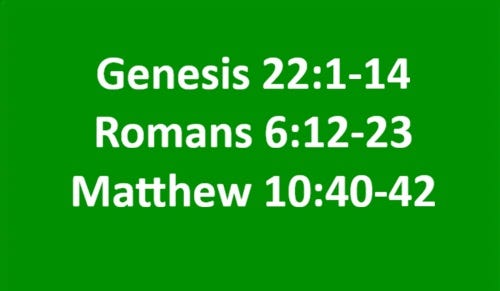
Genesis 22:1-14; Romans 6:12-23; Matthew 10:40-42
These texts explore what it means to belong completely to God. Each passage approaches the theme from a different angle, yet together they reveal that faithful discipleship involves trust, obedience, and a willingness to place God above every other claim on life.
In Genesis 22, Abraham faces one of the most difficult tests in all of Scripture. God commands him to offer Isaac, the son through whom God’s promises were to be fulfilled. The story is unsettling because Isaac is not merely Abraham’s beloved child. He is the embodiment of Abraham’s future and the visible sign of God’s covenant. Yet Abraham responds with obedience. He journeys to Mount Moriah, trusting that somehow God will remain faithful to his promises. At the crucial moment, God stops Abraham and provides a ram as a substitute sacrifice. The story demonstrates that genuine faith is more than belief. Faith is trusting God even when circumstances seem to contradict what God has promised. Abraham’s willingness to surrender Isaac shows that nothing, not even God’s gifts, can take the place of God himself.
Paul’s words in Romans 6 continue this theme of surrender, but now the focus shifts from a single dramatic act to the everyday choices of believers. Paul urges Christians not to let sin reign in their mortal bodies. Instead, they are to present themselves to God as instruments of righteousness. Everyone serves a master, Paul argues. The question is whether that master will be sin or God. Sin promises freedom but ultimately leads to slavery and death. Obedience to God, on the other hand, leads to righteousness and life. Abraham’s test becomes a model for Christian living. Just as Abraham placed Isaac on the altar, believers are called to place their own desires, ambitions, and loyalties before God. The Christian life is not simply avoiding wrongdoing. It is offering one’s entire self to God in grateful obedience.
The Gospel reading from Matthew 10 adds another dimension to this theme. Jesus tells his disciples that whoever welcomes them welcomes him, and whoever welcomes him welcomes the One who sent him. Even something as simple as giving a cup of cold water to one of Jesus’ followers will not go unnoticed by God. At first glance, this passage may seem less demanding than Abraham’s sacrifice or Paul’s call to holiness. Yet it reminds us that faithfulness is often expressed in ordinary acts of hospitality and kindness. Welcoming Christ means welcoming those who belong to him. Small acts performed in the name of Christ become signs of allegiance to God’s kingdom.
Devotion to God touches every part of life. Abraham teaches trust when obedience is costly. Paul teaches that discipleship requires the continual offering of oneself to God. Jesus teaches that even simple acts of generosity can reflect a heart committed to him. Whether through extraordinary sacrifice, daily obedience, or ordinary kindness, the people of God are called to live as those who belong not to themselves but to the Lord. In doing so, they discover that God’s purposes lead not to loss but to life, blessing, and communion with him.
FOR FURTHER EXPLORATION
What does it mean to trust God when obedience requires sacrifice?
How do our everyday choices show whom or what we truly serve?
How does God use ordinary acts of faithfulness to accomplish his purposes?