
The Preacher's Lectionary Notebook - Two Humanities, Two Trajectories, Two Outcomes
The First Sunday in Lent (Year A)

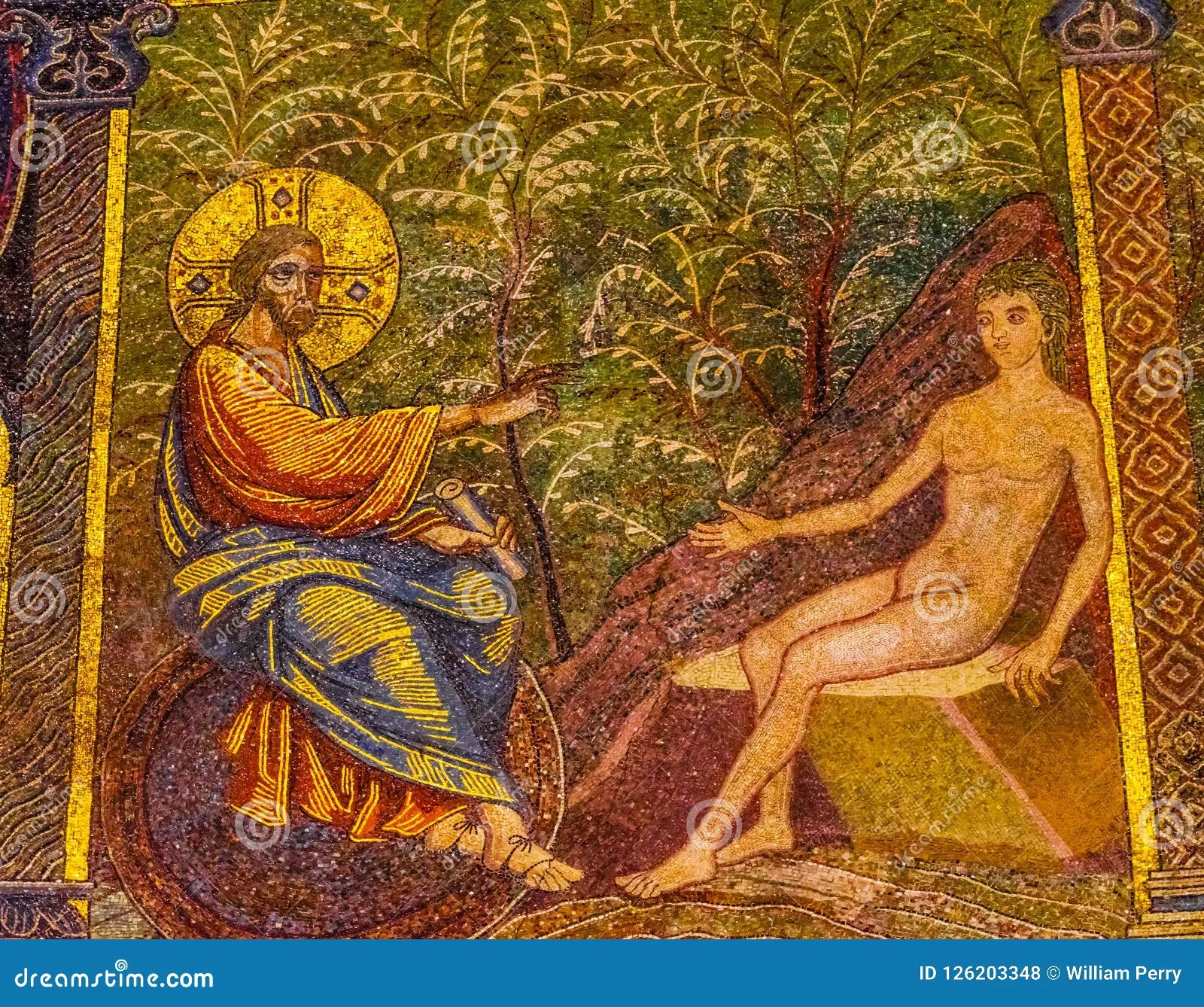
Saint John Florence Italy, “de Jesus Christ Adam,” Mosaic Dome Bapistry
Paul drops us right into the deep end in Romans 5:12–19, but he does it like a storyteller who knows the backstory matters. He starts with Adam, not as a dusty figure from Sunday school flannelgraphs (I’m dating myself), but as a representative human, the first link in a long chain. Sin, Paul says, didn’t just sneak into the world; it came through a person, and with it came death. Not just physical death, but a whole way of being human that is bent, fractured, and off-center. Adam’s one act didn’t stay contained. It spilled outward, rippling through history, touching everyone. Death becomes the great equalizer because everyone is caught up in this shared human condition. Paul isn’t interested in assigning individual blame here as much as he is naming a reality. Something went wrong at the very beginning, and we’ve all been living inside the consequences ever since.
But Paul doesn’t linger in despair. He pivots strongly and introduces Jesus as a new Adam, a counter-story, a reversal that is even more powerful than the original fall. If Adam’s disobedience set the pattern for sin and death, Jesus’ obedience sets a new pattern altogether. And Paul is careful to say that the two are not equal in strength. Grace, he insists, is not merely a repair job; it is an overflow. Where sin increased, grace did not just keep pace; it flooded the scene. Adam’s act brought condemnation; Jesus’ act brings justification. One leads to death reigning like a tyrant, the other leads to life reigning through righteousness. Paul’s language is almost excessive, like he is straining to say, “You don’t understand how much bigger this is.”
It must be noticed how corporate Paul’s thinking is. This is not just about individual souls and private morality. It is about humanity being caught up in larger stories, larger loyalties, larger powers. Adam and Christ are not just individuals; they are heads of humanity, shaping what kind of world we inhabit and what kind of people we become. To be “in Adam” is to live in a world where death calls the shots and brokenness feels inevitable. To be “in Christ” is to live under a different reign altogether, where grace, not sin, has the final word. Paul wants his readers to see that they have been transferred from one dominion to another, even if they are still learning how to live like it.
And maybe that is the quiet hope tucked inside this passage. Paul is not naïve about how deep the damage runs. He knows sin is not just a bad habit we can shake with enough willpower. But he is just as convinced that grace is stronger, deeper, and more persistent than sin ever was. Romans 5:12–19 tells a story about two humanities, two trajectories, two outcomes. One begins with disobedience and ends in death. The other begins with obedience and opens into life. And Paul’s invitation is clear, even if it is not stated outright. Learn to trust the second story more than the first, because that is the one God is determined to tell to the very end.
FOR FURTHER EXPLORATION
What does it mean personally to think of sin and grace as shared human realities, not just individual choices?
How does Paul’s contrast between Adam and Christ shape the way we understand Jesus’ work beyond personal forgiveness?
In what ways might “living under grace” look different from simply trying harder to avoid sin?